Window Accessories: 5 Elements That Truly Matter
Justyna Osińska, 9 October 2026, 13 min read
A window is not just a frame and glass, but a complete set of components that determine the security, comfort, and durability of the entire structure. This guide demonstrates how to select hardware, seals, handles, trickle vents, and blinds so that they work together seamlessly.
Contents
- Window Accessories as a System, Not Add-ons
- Window Hardware: Daily Work Easily Overlooked
- Seals, Tapes, and Insulating Materials Around the Window
- Handles, Locks, and Security Locks
- Trickle Vents and Ventilation with Sealed Windows
- Shutters, Blinds, and Insect Screens: Everyday Comfort
- Selecting Accessories for Window Type: PVC and Aluminium Windows
- Maintenance of the Entire Set of Accessories
- How to Read a Manufacturer's Offer to Avoid Surprises
- Frequently asked questions
Once or twice a year, it is necessary to lubricate the hardware, as it is the only component of the window that experiences mechanical wear with each opening. Window accessories, such as handles, trickle vents, seals, and blinds, significantly influence security and comfort more than the glazing itself, and if chosen poorly, they can degrade the performance of even the most expensive profile.
The product sheet specifies the exact Uw thermal transmittance, as declared by the manufacturer. Customers purchase a window believing that this is the end of the matter. Reality challenges this belief on the first chilly morning when cold air seeps through a leaky seal, and a misaligned handle fails to fully close the sash.
A window functions as a system, not as a standalone product. The frame, glazing, hardware, seals, handle, trickle vent, and possibly a shutter must work together because any weak component diminishes the overall value. The question of which window accessories are truly necessary makes sense only when viewing the window as a set, rather than separately considering the frame and accessories.
Window Accessories as a System, Not Add-ons
Sellers are eager to discuss the Uw value. They less frequently mention that this declared parameter refers to the complete window in a tested configuration (glazing, frame, and connection zones) and does not change with the post-sale selection of hardware or seals. While the choice and condition of hardware and seals affect airtightness and perceived comfort, they do not alter the manufacturer’s declared Uw for the window.
The most important window accessories include hardware, trickle vents, shutters, insect screens, lockable handles (key or push-button), and anti-burglary protections. These often impact functionality, security, and daily comfort of window use far more than the profile thickness or the number of chambers.
Where do the biggest mistakes in purchasing come from? Most often from comparing only the glazing instead of the parameters of the entire window. Meanwhile, Uw describes the complete solution, not a selected fragment of the product. The second common mistake is ignoring acoustic parameters, as a window may meet thermal requirements but still poorly dampen street noise.
Treating the window as a system practically means one thing. When purchasing new windows, it's worth asking about Uw, hardware compatibility, burglary resistance class, and the availability of trickle vents for the chosen profile. When selecting a specific model, such as T-Perfekt or MB-79N, it's good to check with the seller whether the profile has confirmed compatibility with a full set of accessories. This eliminates the risk of incompatibility that sometimes arises when choosing components from different sources.
Window Hardware: Daily Work Easily Overlooked
Hardware operates with every opening and closing of the sash. The tilt-and-turn mechanism, locks, hinges, and rollers physically wear out, even if the window looks impeccable from the outside. Industry recommendations are clear: lubricate the hardware once or twice a year (if applicable to your hardware type), for example during seasonal checks when you naturally review windows throughout the home.
What happens without this maintenance? The sash begins to rub against the frame, the handle becomes increasingly difficult to operate, and the seal compression weakens because the mechanism no longer fully closes the sash with full force. This is a slow process, making it easy to overlook for several seasons. Repairs then tend to be more expensive than regular maintenance.
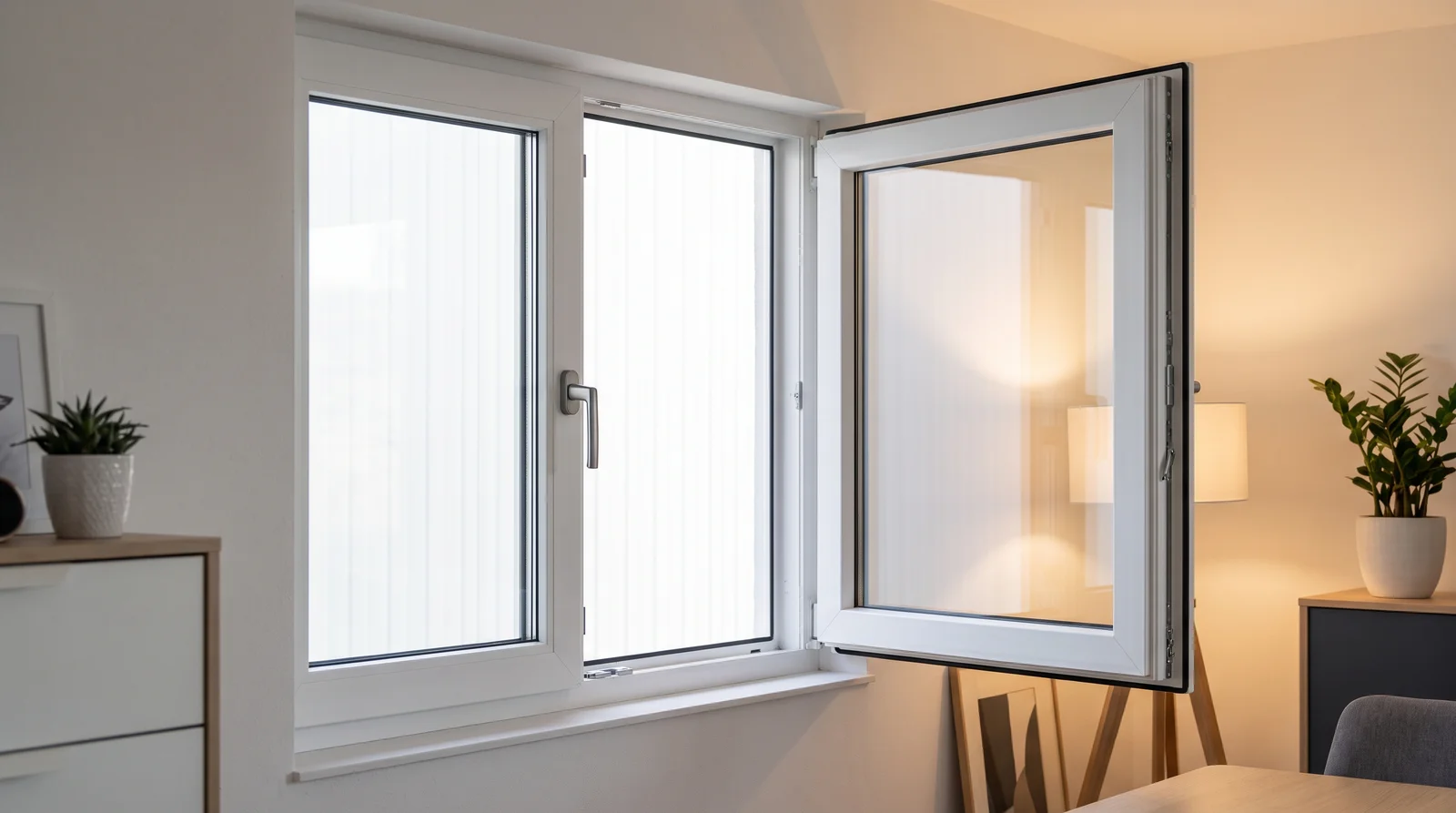
Good window hardware also has a multi-position tilt function. This allows the sash to be set in several ventilation positions instead of just one, providing greater control over airflow in different weather conditions. Models with the Tilt First function also enforce the sequence of sash movements, increasing safety for windows accessible to children.
Maintaining hardware takes five minutes per window.
Lubrication requires only resin-free oil and a cloth. No components need to be disassembled or a technician called, although it's good to see exactly where the lubrication point is on a specific hardware model for the first time. Neglecting this simple task is a common mistake in window maintenance, alongside sporadic parameter comparisons and ignoring acoustics.
Seals, Tapes, and Insulating Materials Around the Window
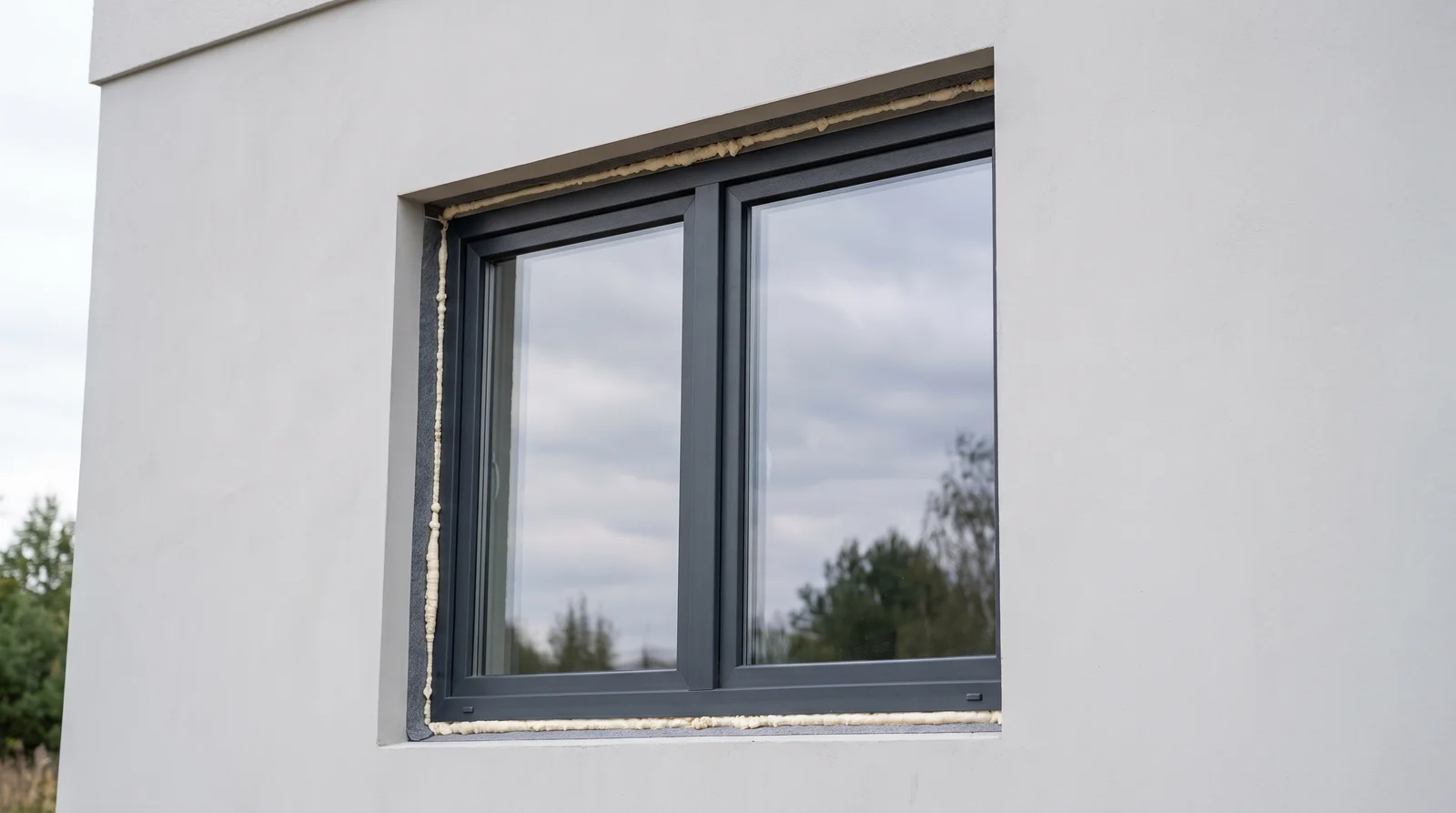
Window tightness depends on two things simultaneously. The first is the seals within the sash and frame construction. The second is the sealing materials used at the frame-to-wall junction during installation, such as vapour-open tapes, vapour-tight tapes, and mounting foams.
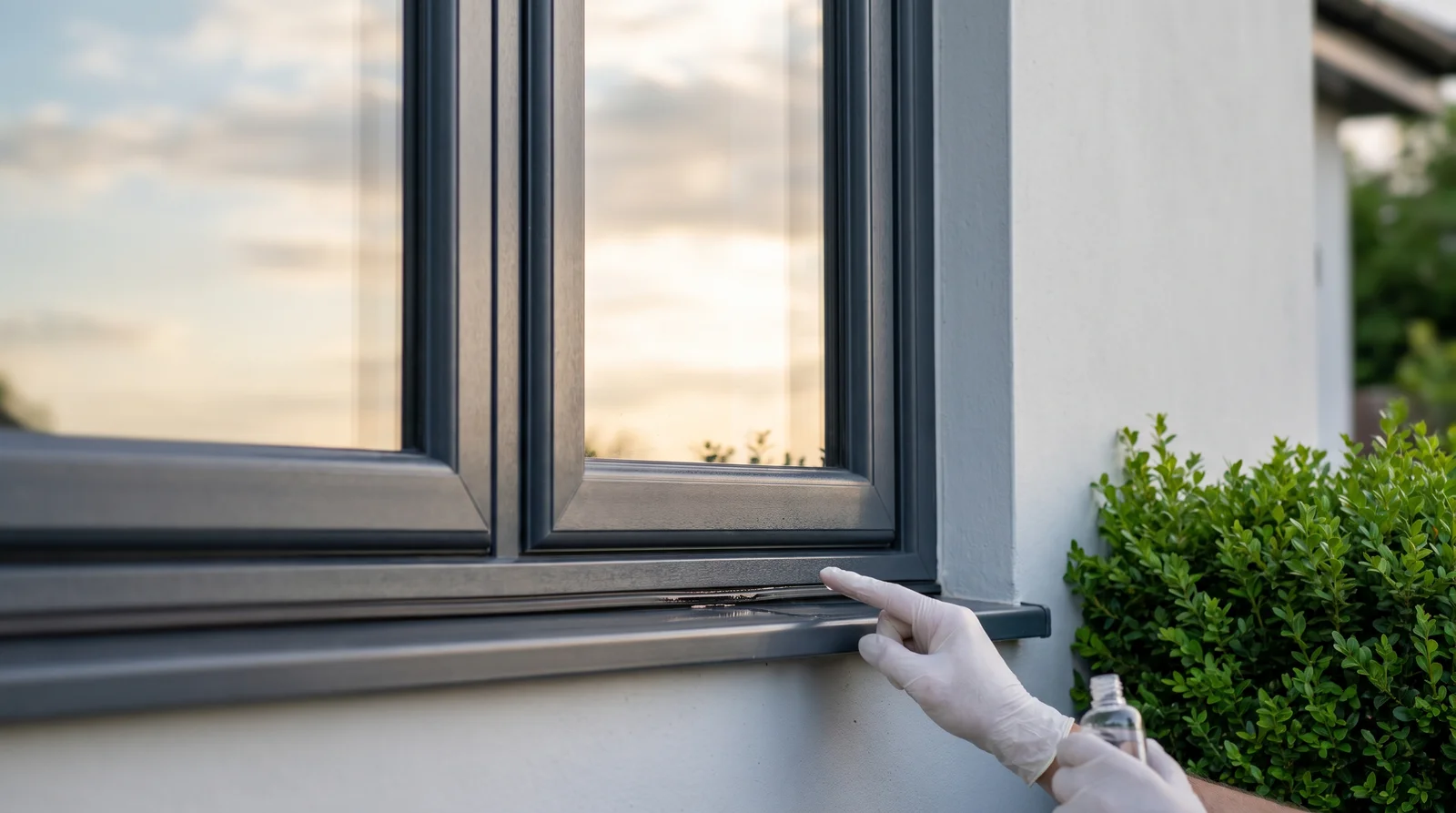
Synthetic rubber window seals lose elasticity over time, especially under UV radiation and temperature fluctuations. They harden, crack at corners, and no longer press against the frame as they did initially. The effect is immediately noticeable: draughts around the sash, condensation on the glazing, and sometimes an audible whistle in strong winds.
Replacing a seal is a simple and quick procedure if the product is compatible with the profile. The problem arises when someone buys a universal seal for a window with a non-standard groove shape. Fitting the element to a specific profile system is the difference between actual tightness and its semblance.
A separate topic is the mounting materials: anchors, dowels, consoles, and mounting wedges. These elements are responsible for how the window holds in the opening and how it distributes loads onto the wall. Improperly selected anchors or too sparsely spaced mounting points lead to frame deformations in large windows, which over time disrupts the hardware operation and the tightness of the entire construction. Window mounting accessories deserve as much attention as the frame itself, not to be treated as a minor technical detail irrelevant to daily comfort.
Internal vapour barrier and external vapour-open membranes complete a tape-sealed installation with an internal vapour barrier and external vapour-open membrane. Skipping this stage, even with the best window on the market, leads to thermal bridges around the frame. More about the installation process and typical mistakes in window fitting can be found in the guide on PVC Window Installation Step by Step.
Handles, Locks, and Security Locks
A standard handle opens a window. Nothing more.
A lockable handle (key or push-button) adds a level of protection, preventing a child from opening the sash or a household member from accidentally tilting it without noticing that the window is in ventilation mode. This solution is especially recommended for rooms on upper floors, where an open window poses a real risk of falling.
Window opening restrictors go a step further. They limit the sash to a tilted position, regardless of the handle setting, which is important in homes with small children and where the window opens onto a balcony without a full-height barrier. Some systems also offer additional locks that reinforce the sash at multiple points simultaneously, rather than relying on a single central mechanism.
Burglar resistance is indicated by RC classes, from RC1 to RC6. RC2 is often recommended as the minimum for ground floor and terrace windows, as it indicates resistance to attack with simple tools for a specified time, sufficient to deter a casual burglar. BUDVAR offers windows with various resistance classes, from RC1 in T-Classic Slim, through RC2 in T-Comfort, to RC3 in the Ecofutural model.
RC2 on paper is not enough if the lock is cheap and the installation is careless. The resistance class applies to the entire set: profile, hardware, glazing, and installation method in the wall. Weakening one element, such as using a standard handle instead of a lockable model, can lower the actual security level below the declared class. Choosing window hardware and handles for a specific security level should occur together with selecting the window itself, not as a separate decision made later.
Trickle Vents and Ventilation with Sealed Windows
Without trickle vents, very airtight windows can cause poor indoor air quality. The better the insulation of the sash and frame, the less air penetrates through the seals, which sounds good for heating bills but bad for indoor air quality. Trickle vents are especially important where windows are very airtight, as they improve controlled ventilation and reduce the risk of moisture and condensation on glazing and frames.
Three main types are available on the market: pressure, manual, and humidity-controlled. Pressure trickle vents open automatically with a pressure difference between the interior and the environment. Manual ones require adjustment by the homeowner, providing full control but also leaving room for forgetfulness. Humidity-controlled trickle vents respond to the humidity level in the room and open wider when steam rises in the bathroom or kitchen.
Which to choose? It depends on the house layout and the habits of the occupants. In bedrooms, humidity-controlled models work well as they automatically respond to moisture from breathing during sleep. In a living room with a fireplace, a manual trickle vent is better suited as it allows adjusting the air exchange intensity to the current situation. The absence of any trickle vent with very airtight windows is a straightforward path to mould on walls near the window, especially in corner rooms with weaker air circulation.
The decision about trickle vents should be made together with the choice of the entire window, not afterward. Profiles like T-Energy achieve very low Uw values precisely due to high tightness. This means that in such windows, a trickle vent ceases to be an option and becomes a practical necessity for a healthy indoor microclimate.
Shutters, Blinds, and Insect Screens: Everyday Comfort
External shutters do more than just darken a room. They can improve thermal comfort by reducing room heating in summer and heat loss in winter, while also supporting privacy and providing partial acoustic and burglary protection. A lowered shutter is an additional mechanical barrier that slows down any attempted break-in through a ground floor window.
Facade blinds operate differently than full shutters, allowing regulation of incoming light without completely darkening the room. This solution is particularly practical in home offices and rooms with large glazing, where full blackout may be unnecessary, but protection from harsh sunlight is needed most of the day.
Insect screens are the most practical seasonal accessory. They improve comfort by allowing ventilation without letting in insects, which in summer can mean the difference between an open window and a stifling room. Frame-mounted models are suitable for windows opened less frequently, while roll-up insect screens allow for quick storage of the mesh outside the season.
Choosing shutters and blinds should be combined with selecting the window system at the design stage, as guides and shutter boxes are installed with the window, not as later adjustments. Electric shutter control, available in BUDVAR's offer, provides the convenience of operating large glazing without the need to manually raise heavy slats at every sunset.
Selecting Accessories for Window Type: PVC and Aluminium Windows
Not every window will accommodate the same accessories. PVC profiles have a wide range of available hardware and trickle vents because they are the most popular system on the market, and manufacturers design accessories specifically for these groove and chamber dimensions. Aluminium windows require dedicated hardware with higher load capacity, as the sashes tend to be heavier for the same dimensions, which translates into different requirements for hinges and locks. Roof windows are not part of the BUDVAR offer on this market.
Wood as a frame material has its own maintenance specifics, requiring regular maintenance of the protective coating, which neither PVC nor aluminium requires. BUDVAR does not offer wooden windows, but it's good to know when comparing systems on the market. PVC usually wins in terms of price to thermal and acoustic parameters, while aluminium is more often chosen where structural rigidity, large glazing, and modern aesthetics of slim profiles are important.
When selecting accessories, a good habit is to check whether the window manufacturer also offers a dedicated set of add-ons. For the T-Classic Plus model, it's worth asking if the construction has designated mounting points for trickle vents and enhanced security hardware. This eliminates the problem of incompatibility encountered when attaching universal accessories to a finished window.
Maintenance of the Entire Set of Accessories
One annual inspection is sufficient in most homes. A good time is at the turn of the seasons in autumn, as this encourages checking each window individually. It's also worth checking the condition of seals, handle pressure, and trickle vent clearance, instead of treating these elements as maintenance-free forever.
A dry cloth and a bit of resin-free oil can service all lubrication points in about fifteen minutes per window. Seals are cleaned with a damp cloth without aggressive detergents for rubber, as strong cleaning agents accelerate material ageing rather than slowing it down. A detailed schedule and step-by-step maintenance checklist can be found in the guide on How to Care for PVC Windows and Gaskets to Last for Years.
Neglecting hardware maintenance is a common mistake in window operation. The effects do not appear immediately, which lulls vigilance. Only after several years does the handle become difficult to operate, the sash hits the frame, and the seal loses tightness to the point where a draught is felt even with the window closed.
Regular maintenance costs time, not money.
When replacing individual elements, compatibility must be ensured. Purchasing a new handle or trickle vent without checking if it fits the specific profile and opening type is a common mistake in DIY repairs. Mismatched accessories can reduce the durability and functionality of the entire set, even if they individually look correct and theoretically fit in terms of dimensions.
How to Read a Manufacturer's Offer to Avoid Surprises
Parameters given for the glazing alone are often better than for the entire window. This is a common marketing practice, not deception, but it's worth knowing that the declaration for the complete product includes the frame, seals, and connection zone, so it may be significantly worse than the Ug value for the insulating glass unit. When comparing offers, it's sensible to always ask for Uw for the entire window in a specific dimension, not Ug in isolation from the rest of the construction.
Acoustic insulation is a separate topic, described by the Rw coefficient in decibels. Standard windows often have Rw around 30 to 32 decibels, while a comfortable level near a noisy street is close to 40 decibels. Is a high Rw alone enough? Not necessarily. Expert studies emphasize that Rw should be analysed together with corrective indices c and ctr, as they better describe the window's behaviour against different types of noise, such as street traffic compared to airport sounds.
The frame material rarely determines acoustics on its own. The final outcome is more often determined by the glazing package, sealing quality, installation precision, and hardware selection than whether the frame is PVC or aluminium. In apartments near busy streets, it is more sensible to invest in better installation and higher Rw than solely in a very low Uw coefficient, which won't solve the noise problem on its own.
A full overview of parameters and model rankings by Uw and Ud coefficients is available in a separate product comparison, which helps compare specific BUDVAR systems in terms of thermal insulation: Ranking of Energy-Efficient Windows and Doors by BUDVAR. For those planning a larger scope of work, a guide on Costs of Replacing Windows in the Home may also be useful, where accessories are included in the full renovation budget.
The decision on accessory selection is best made together with the choice of the window itself, not after its installation. Asking about hardware compatibility, trickle vent availability, RC class, and the possibility of shutter installation should occur before placing an order, as each of these things is easier to plan at the design stage than to add later. A window purchased without this consideration may be technically correct but rarely utilises the full potential offered by a well-chosen, complete system.
Frequently asked questions
Related articles