
Choose the right uPVC windows for your home.
Your step-by-step guide to choosing uPVC windows tailored to your home. Compare designs, energy efficiency, triple glazing, and security.
How to choose the right PVC windows for your home?
Choosing PVC windows for your home is a decision that will last for many years, so it's worth basing it on specific parameters, not just price or appearance. Below you will find criteria that genuinely affect thermal, acoustic comfort, and security in the home — along with specific model recommendations from BUDVAR's offer.
Thermal insulation and Uw coefficient
The fundamental technical parameter of a window is the thermal transmittance of the entire window, denoted as Uw and expressed in W/(m²·K) — the lower the value, the better the thermal insulation. In BUDVAR's offer, these values vary depending on the model: Uw starting from 0.57 W/(m²·K) in the T-Energy model, 0.69 in T-Perfekt, 0.75 in T-Classic Plus, 0.84 in T-Classic and T-Comfort, and 0.85 in T-Classic Slim.
For an energy-efficient or passive house, consider the model with the lowest Uw coefficient, namely T-Energy (Uw 0.57), which additionally offers sound insulation at 46 dB. If the priority is combining very low Uw with good acoustics at a slightly different budget, T-Perfekt (Uw 0.69, 38 dB) is a good direction. For standard applications, where a reasonable compromise between parameters and cost is important, T-Classic Plus (Uw 0.75, 43 dB) is suitable.
It's important to remember that the Uw coefficient alone is not everything — the actual thermal insulation of the building is also influenced by the window installation method and the quality of the frame construction, which we discuss later in the guide.
Profile construction and number of seals
PVC window profiles are constructed from multi-chambered sections, and the number of seals in the sealing system affects the tightness and acoustic insulation of the construction. The industry offers various profile depths and seal configurations — this is one of the elements worth specifying when choosing a specific model and system, as it translates into the Uw and dB parameters of the window.
Instead of focusing solely on the profile construction, it is more practical to compare the final parameters of the models — Uw and acoustic insulation in dB — as these show the actual effect of the applied construction solutions.
If you prefer a slimmer, more elegant frame while maintaining good parameters, choose T-Classic Slim (Uw 0.85, 40 dB) — this model has a narrower visible profile, which increases the glazing area and interior lighting.
Selecting windows for room type
Not every window in the house needs to have the same parameters — selection should be varied depending on the function and location of the room. In a bedroom facing a busy street, the priority is soundproofing, so models with the highest available values are suitable: 46 dB (T-Energy) and 45 dB (T-Comfort).
In rooms located on the north side, where there are no solar gains to compensate for heat loss, it's worth opting for models with the lowest Uw coefficient — T-Energy (0.57) or T-Perfekt (0.69) — they will most effectively limit heat escape.
On the ground floor and wherever enhanced security is desired, consider models available in RC2 as an additional option — this applies to all BUDVAR PVC models except T-Classic Slim, which is offered in RC1 class. The decision on the specific resistance class should be made together with an advisor, as it depends on the configuration of hardware and glazing.
Hardware and security (options)
Standard perimeter hardware provides a basic level of burglary protection, but for exposed rooms — ground floor, terrace, windows easily accessible from the outside — consider upgrading the resistance class to RC2 as an additional feature, ordered individually, not as a standard element. The final class is determined by the combination of appropriate hardware, locking points (anti-burglary hardware), and reinforced glass.
A practical addition to security and user convenience are handles with locks (preventing accidental opening by children) and ventilators ensuring constant micro-ventilation without the need to open the sash — these are accessories worth considering at the ordering stage.
For homes with children or pets, consider hardware with a tilt function (ventilation) independent of full opening — this is an element worth discussing with an advisor when configuring the order.
Aesthetics and color scheme
PVC windows are available in a wide range of colors — from classic white, through wood-like shades, to a broad palette of veneers and colors matched to the façade. The choice of color should be consulted with the façade and door joinery design to maintain the consistency of the entire building structure.
For modern investments, slimmer profiles like T-Classic Slim work well, which optically increase the glazing area. In classically styled buildings, muntins dividing the glass pane into smaller sections are more commonly used — they can be individually matched to the window style.
It's important to remember that color and finish are matters of aesthetics, which should not overshadow technical parameters — the final model choice should combine both aspects.
Common mistakes when choosing windows
The first common mistake is focusing solely on price and ignoring the Uw coefficient and acoustic insulation — a lower price may mean worse parameters, which in the long run translate into higher heating costs. The second mistake is ignoring the quality of installation — even the best window with a low Uw will not perform according to catalog parameters if poorly installed in the frame, without proper thermal insulation and vapor barrier at the installation site.
The third mistake is not matching the window to the room's function — installing the same model everywhere instead of varying acoustic or thermal parameters depending on the location and exposure of the window to the sun and noise.
Another oversight is the lack of sun protection — large south or west-facing glazing without external blinds leads to room overheating in summer, even with a good window. In such cases, it's worth planning external blinds or façade shutters from BUDVAR's offer, available in a separate category of external blinds.
When to consider aluminum?
If you are interested in very large glazing, narrow frame constructions while maintaining rigidity, or an increased burglary resistance class already in the basic profile construction, it's worth comparing the offer of BUDVAR aluminum windows. The Ecofutural model offers Uw 0.88 W/(m²·K) and 44 dB, and its Ecofutural OC variant — Uw 1.1 W/(m²·K) and 45 dB. Ecofutural and Ecofutural OC models are available in RC3 class (with appropriate hardware and glazing configuration). MB-79N (Uw 0.8, 43 dB) and MB-79N US (Uw 0.81, 42 dB) models complement the aluminum offer.
Aluminum is particularly suitable for modern designs with large glass panes and narrow mullions, while PVC windows remain a universal and proven solution for most single-family homes.
The impact of installation on actual insulation
Choosing window parameters is only half the success — the method of embedding it in the wall is equally important. In double-layer walls (2W) and buildings insulated with the ETICS method, especially with windows with a low Uw coefficient, layered installation (so-called warm installation) is recommended, which limits thermal bridges at the frame-wall junction. Essential complements are properly selected vapor barrier and vapor-permeable tapes, which protect the connection from water vapor condensation and freezing.
Checklist before choosing windows
Before making a final decision, it's worth gathering the following data for each window opening in the house:
- Required Uw coefficient of the window
- Expected acoustic insulation (dB) depending on external noise
- Is an increased burglary resistance class needed — RC (optionally up to RC2 in PVC models)
- Window exposure relative to the cardinal directions
- Planned installation method (warm installation for 2W/ETICS walls)
- Required accessories: ventilators, handles with locks, possible muntins
Such a prepared list significantly facilitates the conversation with an advisor and allows for quicker selection of the right model from BUDVAR's offer.
BUDVAR PVC window collections
Explore the full range of PVC windows — from universal models to the most energy-efficient, tailored to various needs.
PVC Windows
T-Comfort
Popular 6-chamber system with a 70 mm frame depth. Outstanding price-performance ratio, ideal for residential construction.
PVC Windows
T-Classic
Versatile 7-chamber system with a 70 mm frame depth. V-Perfect technology of invisible weld seams and a wide range of frame variants.
PVC Windows
T-Classic Slim
7-chamber system with a slim 70 mm frame and reduced face width of 105 mm. More light while maintaining high insulation values.
PVC Windows
T-Classic Plus
Advanced 8-chamber system with a 70 mm frame depth. Best parameters in the 70 mm class, with possible Super-Warm glazing Ug 0.6.
PVC Windows
T-Perfekt
Energy-saving 6-chamber system with a 82 mm frame depth and 3 seals as standard. Premium class — Uw from 0.69 W/m²K.
PVC Windows
T-Energy
Passive 6-chamber system with an 88 mm frame depth. Lowest Uw = 0.57 W/m²K in the PVC class — for passive houses and the NF40 standard.
PVC window accessories
Choose additions that genuinely impact the comfort and safety of window use.
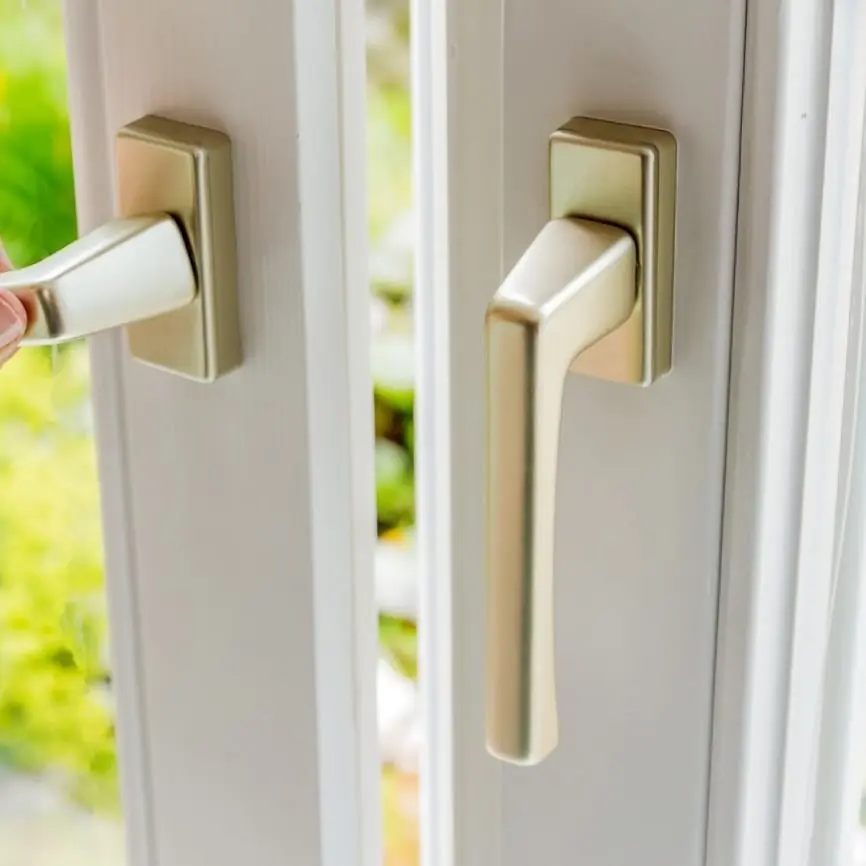
Handles and pulls
HOPPE handles, greenteQ with RC2 and alarm. Pulls for sliding doors.
View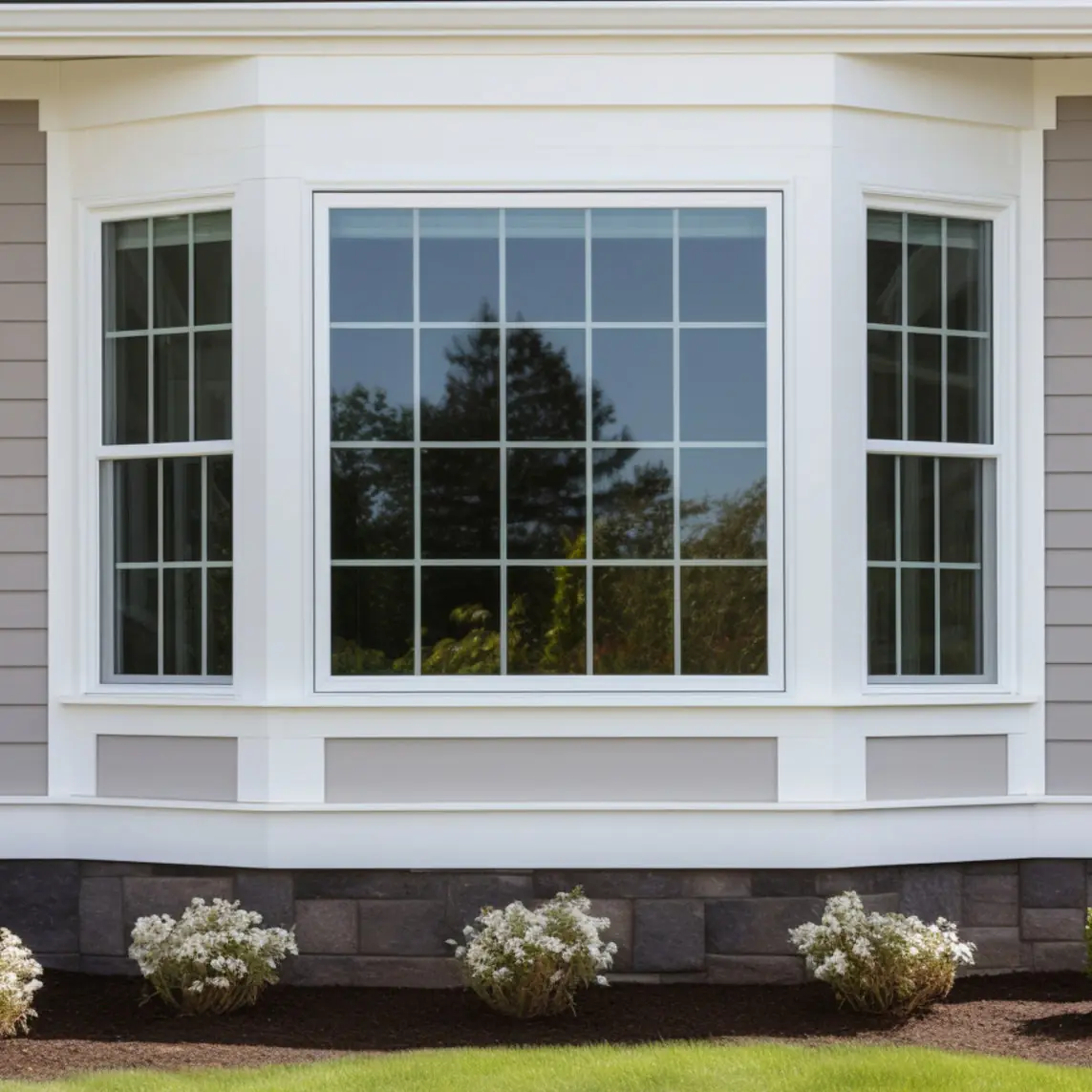
Grilles
Viennese stick-on grilles, PVC structural and internal aluminium grilles.
View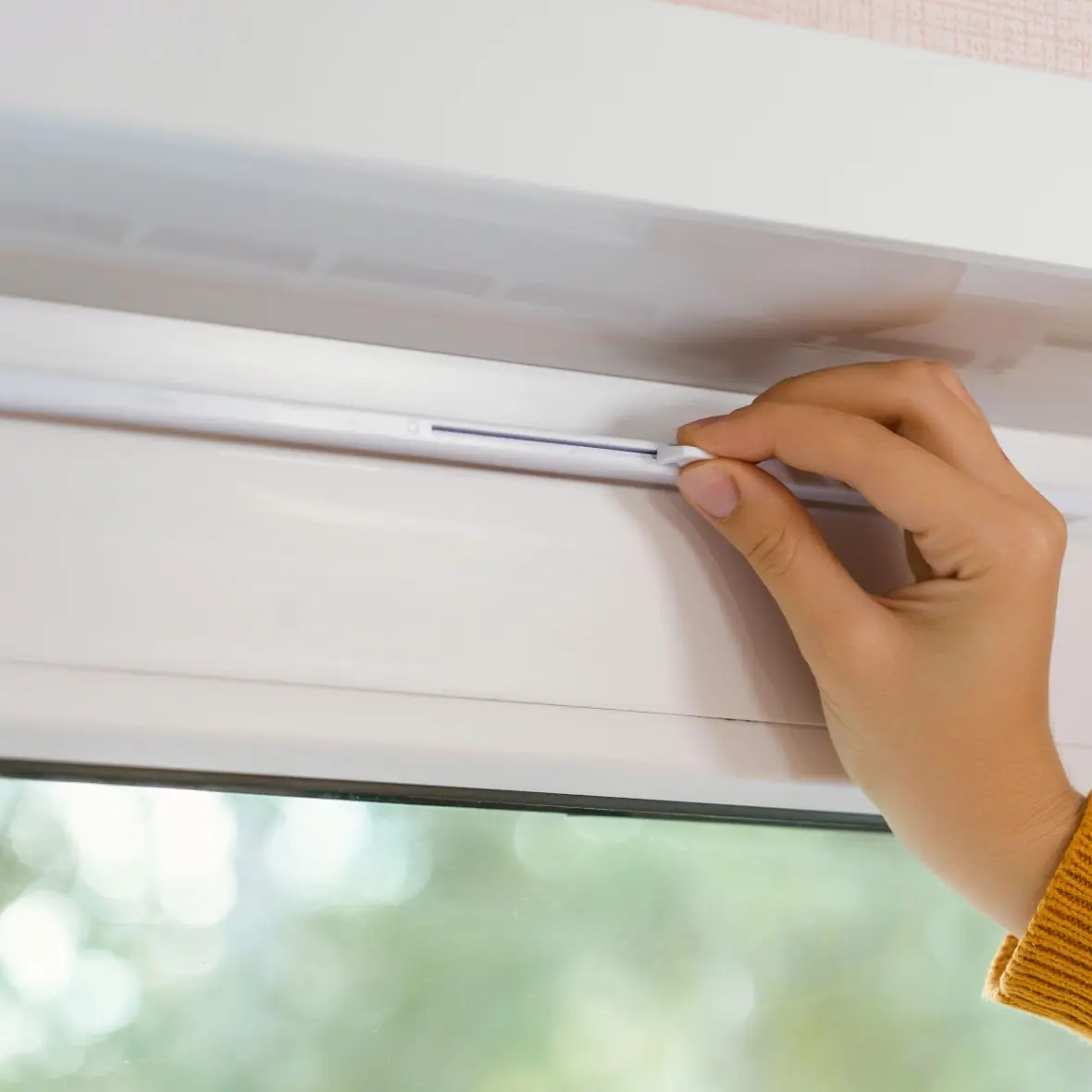
Vents
Pressure-controlled, manual and humidity-controlled window vents.
View
Hardware
RC2, Tilt First, Designo, multi-stage tilt and 5 other functions.
View
What is hidden in the window cross-section?
Technical parameters of a window — such as Uw coefficient or acoustic insulation in dB — are the result of the profile construction, sealing system, and glazing used. Therefore, when choosing a model, it's worth comparing the final values of individual collections.

Installation determines actual insulation
Even a window with a very low Uw coefficient will not provide the declared parameters if poorly embedded in the wall. Professional layered installation limits thermal bridges and protects against water vapor condensation at the frame-wall junction.
Check the full offer of BUDVAR PVC windows
Compare models T-Energy, T-Perfekt, T-Classic Plus, T-Classic, T-Comfort, and T-Classic Slim and choose a window suited to your home.
Frequently asked questions about choosing PVC windows
Request a free quote
Leave your details and our advisor will prepare an offer tailored to your project and get back to you.
Not sure which window model to choose?
Talk to a BUDVAR advisor and choose PVC windows tailored to your home.