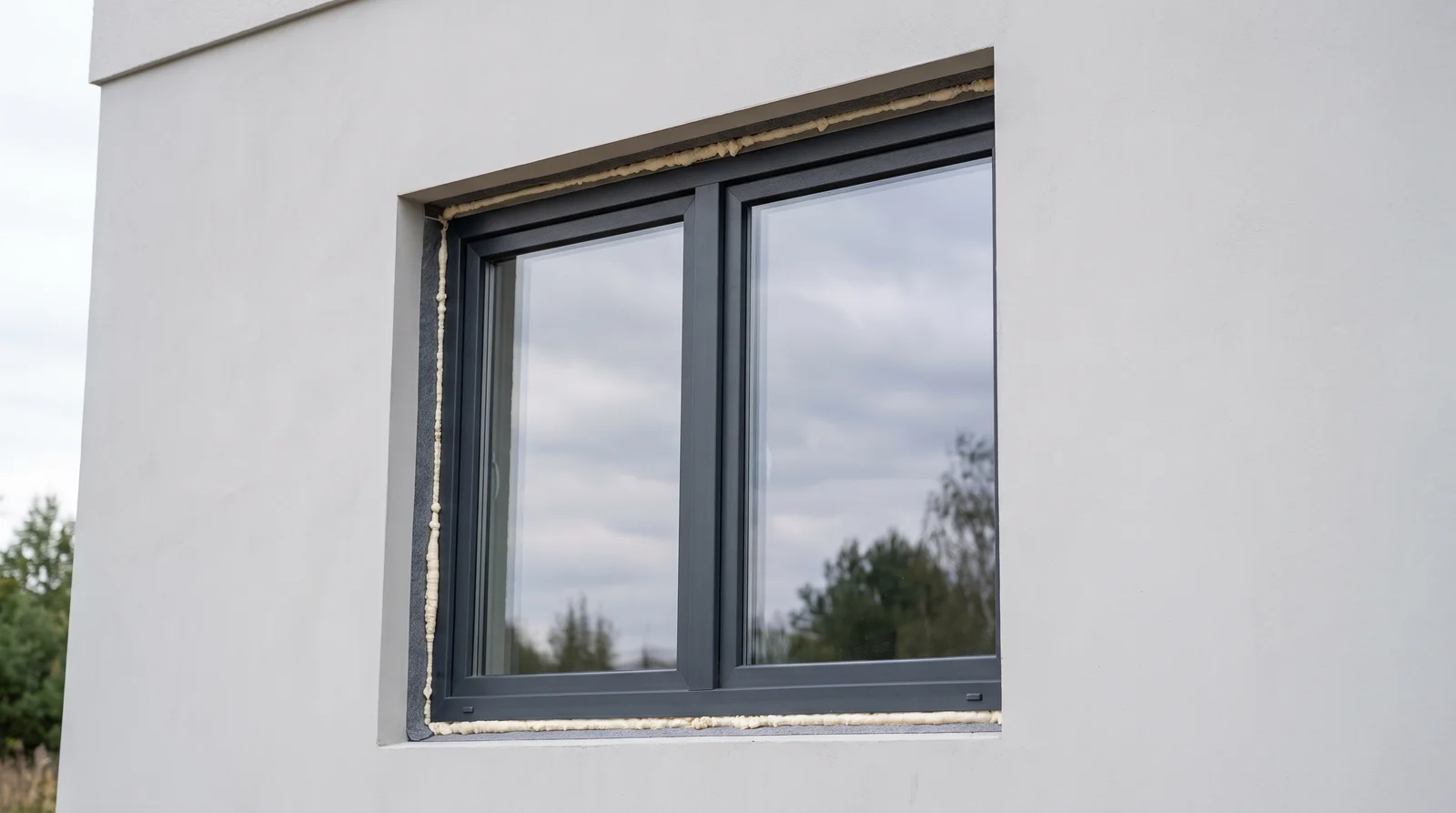
Window Installation – When to Install Windows in a New Home?
BUDVAR, 16 August 2023, 7 min read
Windows in a new home are installed after the roof is covered but before plastering and screeding. We explain the reasoning behind this sequence, when to order windows, and when to delay installation.

Building a house is a significant investment involving many people, from the investor and architect to construction crews, plumbers, electricians, tilers, and interior finishing specialists. But do you know when windows should be installed in a newly constructed house? When should you schedule the warm installation (tape‑sealed installation with internal vapour‑control and external vapour‑permeable airtightness tapes) with the window and door manufacturer to optimally utilise the thermal properties of the windows?
Windows in a new home are installed after the walls are erected and the roof is covered, but before plastering, screeding, and external wall insulation (EWI). The installation of windows and external doors brings the structure to the weathertight stage. Windows are custom-made, so measurements are taken in finished openings, and orders must be placed several weeks before installation. After installation, the house should be frequently ventilated to prevent moisture from plasters and screeds from remaining inside.
What does a closed shell state mean?
On UK and Irish building sites, people usually talk about the shell (or shell and core) and reaching the weathertight stage rather than using formal definitions. In practice, this means the structure is up (walls, floors/ceilings and roof with covering) and the building is made weatherproof with external windows and doors so interior works can proceed. The exact scope varies by contractor, so agree in the contract what is included at each stage (for example, whether the garage door is part of this stage).
In practice, the closed shell state usually includes walls, ceilings, a roof with covering, and external windows and doors. It is best to explicitly include the garage door in the contract, as companies calculate it differently. We describe the door installation process in the guide how entrance door installation works.

When is the best time to install windows in a house?
The installation of PVC windows in a new home should occur after the walls are built and the roof covering is installed, but before starting the application of internal and external plasters. It is crucial to ensure proper ventilation of the rooms after the building is closed and before moving on to so‑called wet works. After window installation, it is much harder to ensure free airflow, which will cause the building to dry much slower.
Lack of proper air circulation in the building can also lead to permanent damage to the window frames. In a tightly closed building, excess humid air will condense and settle on internal elements, causing their deterioration.

Windows before or after the roof?
Windows are installed after the roof covering. The roof structure alone is not enough: rain and snow can still enter and soak the reveals. Installation PU foam and airtightness/weatherproof tapes around the window must remain dry, otherwise the joint loses its tightness. Additionally, the wall and lintels bear the weight of the roof structure and covering, so it is better to install the window in an opening that has already absorbed this load.
Roof windows are a separate matter: the roofer installs them together with the covering. Here, we are discussing windows in walls.
Windows before or after plastering and screeding?
Windows first, then plastering and screeding. The plasterer finishes the reveals to the completed frame, ensuring a smooth edge that does not require later adjustments. Fresh plasters and screeds also need protection from rain and frost, which is only possible in a closed building.
Before installation, the level of the finished floor must be known. The team sets balcony and patio doors and floor‑to‑ceiling windows according to this level.
During plastering, frames are taped and covered with foil. Do not leave factory protective foil on profiles for long, as it adheres strongly to the frame in the sun. It is best to remove it right after plastering.
Windows and wall insulation
Windows are installed before external wall insulation (EWI). The insulation then reaches the frame and covers the joint from the outside. In a two‑layer wall, the window is usually positioned at the outer edge of the wall, at the junction with the insulation, and in energy‑efficient homes, sometimes within the insulation layer itself. Therefore, the thickness of the insulation must be known before installation. The window's position also determines the sealing method. In a warm installation, the joint is sealed from the inside with a vapour‑control tape and from the outside with a vapour‑permeable one (see more window installation tips).
How to ventilate a house after window installation?
Plasters and screeds bring a lot of water into the house. With closed windows, moisture settles in the coldest places, such as on the glass and in the corners of the reveals. During wet works and for the first few weeks afterward, keep windows slightly open and ventilate the house thoroughly several times a day. In cold weather, temporary heating combined with ventilation or a dehumidifier helps. Condensation on the inside of the glass in a new home usually comes from this moisture, not a defect in the windows. We discuss this further in our window tips.
At what stage of construction should windows be installed? Sequence of works
This is the typical sequence of works for a masonry house and the place of windows in this plan:
| Construction Stage | What Happens on Site | Windows |
|---|---|---|
| Foundations, Walls, and Ceilings | wall construction, lintels, ceilings | select windows according to the project, consult with an adviser, preliminary valuation |
| Roof (end of open shell) | roof structure and covering | measure finished openings and order windows |
| Weathertight Stage | installation of windows and external doors | installation, check sash operation, acceptance |
| Installations | electrical, plumbing, heating | frames protected from damage |
| Wet Works | internal plasters, screeds | frames taped and covered with foil, frequent ventilation, remove factory foil after plastering |
| External Wall Insulation (EWI) and Render | wall insulation, external plaster/render, external sills | insulation reaches the frame and covers the joint |
| Interior Finishing | flooring, painting, internal sills | window cleaning, check and adjust hardware |
The installation sequence may vary, but windows should be in place before wet works.
Installing PVC windows: temperature and season considerations
Windows are most conveniently installed in spring and autumn, in dry weather and temperatures from a few to several degrees above zero. Summer is also fine, as long as the reveals are not wet from rain. Installing in autumn has another advantage: in a closed and heated house, crews can work inside during winter.
Winter does not exclude installation. In light frost, the team uses winter PU foam and tapes suitable for cold conditions, and the reveals must be dry and frost‑free. The temperature range specified by the manufacturer on the foam and tape packaging is crucial. Regular foam does not cure well in frost. PVC profiles are less flexible in the cold, so windows must be handled and mounted more carefully.
TIP: Even at the weathertight stage, it is crucial to ensure proper security against potential break‑ins. A building with new window frames left unsupervised can be an attractive target for burglars. To avoid unpleasant surprises and additional costs, consider installing an alarm or monitoring system to maintain constant supervision over the building.
When not to install windows?
- During severe frost, when the temperature drops below the range specified on the foam and tape packaging.
- In rain and snow, or when the reveals are wet or frosted. Foam and tapes do not adhere to wet surfaces.
- Before the roof covering, when water pours directly into the openings from above.
- When the openings are not ready: missing lintels, uneven walls, or dimensions have changed after measurement.
When to order windows for a new home?
Windows for a new home are custom‑made. The first consultation with an adviser is best during the wall construction stage. At this point, you have the project with the window schedule and time to choose the profile, glazing, colour, and hardware. The guide how to choose windows for a house will help, and available models can be found in the PVC windows section.
Windows are ordered after measuring the finished openings, as the wall almost always deviates slightly from the project. Measurements are taken when walls and lintels are completed. We detail this process in more on measuring windows.
Producing custom windows takes several weeks, and the exact timeline is provided by the adviser during the valuation. Therefore, plan backward: windows should arrive when the roof is covered, but before plasterers start work. Installation in a typical house usually takes from one to several days.
When ordering, also decide on the installation method. For warm installation, the team needs to know the type of wall and insulation thickness in advance. The overall process, from setting the frame to adjustment, is outlined in PVC window installation tips.
The cost of windows for a new home depends on the number and dimensions of windows, profile, glazing package, colour, hardware, and installation method. An adviser at the BUDVAR showroom will arrange a free measurement and prepare a quotation for your project.
Frequently asked questions
Related articles